Tuesday, 22 December 2015

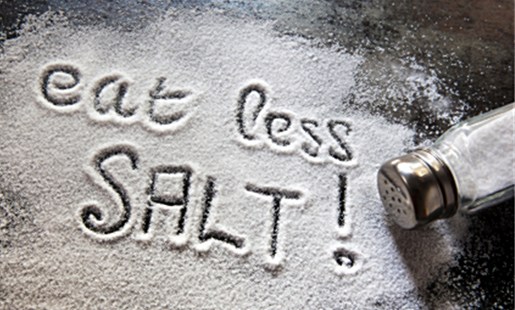
10 COMMON FOODS AND FOOD ADDITIVES TO AVOID TO MINIMIZE YOUR SALT/SODIUM INTAKE


    1. Bread
    2. Tomato sauce and Ketchup
    3. Margarine
    4. Salted butter
    5. Commercial juices
    6. Biscuits 
    7. All baked products e.g. cakes, cookies 
    8. All cured and canned meats e.g. Sausages, Ham, Brawn and Smokies
    9. Potato crisps, cheese rings and commercial popcorn
    10. Artificial spices and condiments e.g. beef and chicken cubes, maggi, royco cubes, beef chilli cubes, soy sauce  

    Friday, 18 December 2015

    SALT (SODIUM CHLORIDE) SUBSTITUTES


    1.      Herbal Salt
    Herbal salts consist of a mix of herbs and a minimum amount of sea salt, which is low in sodium content. There are several brands available in most supermarkets. Most herbal salt brands cost between Ksh. 80 and Ksh. 200. I know it’s not easy to make Kenyans switch to healthier options considering the fact that the normal salt costs as low Ksh. 10 or less.
    Ensure that the herbal salt is iodized before you purchase it, which is usually indicated on the packet/packaging.

    I still do not understand why most unhealthy foods are cheap and the healthier ones way more expensive. I think one of the rogue business men’s strategies is to make billions from getting people sick. Monsanto is clearly not the only culprit when it comes to literally feeding people cancer and other Non-Communicable Diseases!

    2.      Potassium Chloride Salt    
    I need to start with a contraindication for this particular salt. DO NOT use a Potassium Chloride salt if you or one of the persons intended to consume food prepared with this particular salt has a Renal/Kidney problem. Major reason for the contraindication is the fact that this salt will worsen the problem.  I see many Diabetic patients preferring this salt, however it’s very important to note that if you have any medical condition you need to consult a Licensed Nutritionist for advice before making any changes or including a new product to your diet. One of Diabetes complications is Renal Failure. If you or your loved one is diabetic and has swollen feet (edema) or has a swelling on any part of the body, an assessment is very important to make ensure that the fluid retention is not caused by a kidney problem.

    Other than that, Potassium Chloride is a great substitute for Sodium Chloride salt. It can be used as a table salt substitute; it tastes remarkably similar to salt with just a slight aftertaste. This salt is also effective for cooking and sprinkling at the table.
    NB: Some researches have disqualified this salt for use as a salt substitute. I'm still working on a desk review of the research findings supporting and against this salt. I'll let you know my analysis soon.

    3.      Low Sodium Sea Salt
    This is sea salt with reduced sodium content and it’s less costly compared to the herbal salt. It can be used for cooking and sprinkling at the table.
    Of the three mentioned salts, the best option is the herbal salt.

    Tip to reduce your salt consumption
    ·         Use fresh natural herbs and spices like coriander, ginger, onions, garlic, chillies, cinnamon, lemon juice, pepper and vinegar among others. Apple cider vinegar is an excellent healthy choice. These help to naturally improve the taste of food, hence you use less salt in cooking.
    ·         If you’re on a budget, you can use sodium reduced salt to cook and herbal salt for sprinkling.  

    NB: One of the body’s mechanisms of warning you that you’re taking in too much salt is thirst.


    As always, remember. Your Health is Your responsibility!!

    WONDERING WHERE THE EXCESS SALT IN YOUR DIET IS COMING FROM?

    I know I do sound like a broken record at this point going on and on about Non-Communicable diseases and why each of us needs to take the initiative to prevent them. Every time I tell my clients, friends and family they’re consuming too much salt I’m met with rolling eyes and almost everyone at this point thinks I’m the annoying nutritionist friend they’d rather avoid during meals. Well, you’re kinda right on that one and to annoy you even more I’ll repeat it. Sodium increases your blood pressure and increased/high blood pressure over a prolonged period leads to Hypertension.

    High Salt (Sodium) intake has been proven to raise blood pressure, which eventually exposes you to hypertension. The unfortunate fact is that most of us have no idea how much sodium we’re taking. There’s so much hidden sodium in processed products including juices, cured meats, biscuits etc. In Kenya the matter is devastating because more than half of the foods in the retail stores, supermarkets and on the streets with hawkers is pumped with very high amounts of sodium.

    To give you a clearer picture of the situation, let’s look at a sample family Menu. So, let’s assume for breakfast you take bread from the store/supermarket with an egg, a sausage/smokie/ham etc and a cup of tea or milk. The only thing on that list without salt/sodium is the milk or tea. The cured meats (sausage, smokie, ham, brawn etc.) all have sodium chloride (salt) and Sodium benzoate. The sodium causes hypertension and the benzene is a carcinogen (cancer-causing). So, for lunch you take a meal of your choice and add ketchup or tomato sauce in your food, the sauce has sodium benzoate so you’re exposing yourself to both hypertension and cancer and also remember that the food already has added salt. If during the day you snack on biscuits and or commercial juices from the shop, I hate to break your bubble again. More than 90% of the brands I’ve seen in the market, both local and international, have both sodium chloride/salt and sodium benzoate, which is a preservative. So, do you add commercial spices and condiments to your food while cooking or after cooking? These too have both salt and sodium benzoate and to top that you also add salt during the cooking process.  If you like ‘BITEZ’ like me, their crisps and cheese rings have sodium benzoate. Oh, if you use salted butter or the margarine sold in Kenyan market on bread; that too has salt!!

    In summary, you and I unknowingly eat close to ten times or more the amount of salt we should be eating per day, most of it hidden in processed products. Oh by the way Dasani water is high in sodium too! Add that to reasons why I’m a strong campaigner against the Coca cola industries. The sugar, salt, excess caffeine and God knows what else is hidden in those drinks is silently turning Kenyans into ‘the walking dead’!!

    So, have I at least made you understand why you need to watch your diet more? Okey, I’ll list foods that you need to avoid to reduce your sodium intake on the next article. All I can say for now, please read the ingredients before buying any food from the store and reduce the amount of salt you add to food. If this is not working, I’ll discuss on another article how you can substitute salt (sodium) in your cooking. Till then, remember that your health is your responsibility!!


    Monday, 14 December 2015

    SALT IS KILLING YOU!!


    Unfortunately, very few of us were allowed to keep the sensitive, discriminating palates we were born with. I’m 100% certain if you served the food you eat daily to a person who has never eaten salt before, they would spit it out right away.   
    I cringe every time I read food labels and discover the amount of salt (Sodium Chloride) added to processed foods. Kenyans are exposed daily to numerous ingredients that have been proven by research to cause Non-Communicable Diseases and the fact that the ‘watch-dog’ bodies don’t seem to be doing anything to change the situation makes the matter a thousand times worse.   
    International guidelines dictate an ‘Adequate Intake’ of 20–40 mmol (460–920 mg) of sodium per day. This corresponds to 1.15–2.3 grams of salt. The set ‘Upper Limit’ or maximum amount for sodium intake is 2300 mg per day (corresponding to approximately 6 grams of salt). Well, let me make your work easier, it is approximately 1 teaspoon of salt is approximately 4.2 grams. Intake above this level is regarded as likely to cause harm. 
    Sodium and Potassium are very important salts in the body. Excess sodium consumption however raises your blood pressure.  Potassium on the other hand is the main mineral responsible for lowering the blood pressure. This means that for your blood pressure to be normal, the blood levels of potassium and sodium must be at ‘normal’ levels.  
    Salt would rapidly be fatal if the kidneys could not excrete it as fast as you eat it. The kidneys excrete salt (sodium) faster at a higher blood pressure, and the ability of the kidneys to excrete excess sodium provides powerful and life-saving protection against the accumulation of a dangerous backlog of salt. High blood pressure unfortunately has a number of dangerous long-term health outcomes, and greatly increases the risk of both stroke and heart disease. (Australian National Health and Medical Research Council) Continuously elevated blood pressure or high blood pressure over a prolonged period is referred to as Hypertension.   
     I have unfortunately not come across research findings indicating how much sodium Kenyans are consuming. Considering the increasing prevalence of Non-Communicable Diseases among Kenyans, especially among young kids and the youth, it’s crucial for the Government to fund not only research, but also a consumer behavior change communication project specific to Food, Nutrition and Lifestyle Choices.
    As always, I need to sing Kenya’s seemingly National Slogan, Government regulatory bodies need to start doing their job. The Kenya Bureau of Standards, Kenya Pharmaceuticals and Poisons Board and whoever else whose job it is to regulate the local foods manufacturing and imports market, seriously need to be fired or explain to Kenyans why Supermarkets are packed with foods that are literally killing Kenyans.
    I normally advise parents not to start adding salt (sodium chloride) to baby food until way after 1 year, after which they still need to use a very small amount, or even better, iodized herbal salt. You already eat Sodium in your daily diet, so you don’t need to be adding too much of it in your food.
    If you’re like me and your taste buds have been totally messed up over the years by a consistent high intake of salt, simply substitute the normal table salt with what most people refer to as Diabetics salt. It’s basically sodium reduced sea salt, just ensure that it’s indicated on the container that it’s Iodized to prevent goiter. Even better if you can, substitute normal table salt with Iodized herbal salt; that way you’ll get additional benefits of healthy herbs. Herbal salt may not be the best if you have ulcers or Hyper-Acidity due to the added spices and herbs that might trigger acid production.
    For any queries or Nutrition Consultation or a topic you would like me to address, comment below or visit my Facebook page; www.facebook.com/StellarAfya or email me on stllkimani@gmail.com.

    Tuesday, 8 December 2015

    CANCER, KENYA’S WORST NIGHTMARE


    In the recent past we’ve seen increased uproar about Cancer, especially after several media personalities have unfortunately been diagnosed with this merciless monster. Cancer is increasing at an extremely high rate and it’s time we all played our part to stop this very dangerous trend. So, what is cancer?

    In my own terms, cancer is the worst disease ever experienced on earth, which affects people of all ages from newborn children, to older persons and needs to be eradicated from the face of the earth as early as yesterday. In medical terms though, Cancer, also called malignancy, is an abnormal growth of cells.  In all types of cancer, some of the body’s cells begin to divide without stopping and spread into surrounding tissues.

    According to the National Cancer Institute, Cancer can start almost anywhere in the human body, and is made up of trillions of cells. Normally, human cells grow and divide to form new cells as the body needs them. When cells grow old or become damaged, they die, and new cells are formed to replace them.

    When cancer develops, the normal cell division process breaks down. Old or damaged cells survive when they should die, and new cells form when they are not needed. These extra cells can divide without stopping and may form growths called tumors. Many cancers form solid tumors, which are masses of tissue. Cancers of the blood however, such as leukemia, generally do not form solid tumors.  

    Cancerous tumors are malignant, which means they can spread into, or invade, nearby tissues. In addition, as these tumors grow, some cancer cells can break off and travel in the body through the blood or the lymph system and form new tumors far from the original tumor.
    Unlike malignant tumors, benign tumors do not spread into, or invade, nearby tissues. Benign tumors can be very large. When removed, they usually don’t grow back, whereas malignant tumors sometimes do. Unlike most benign tumors elsewhere in the body, benign brain tumors can be life threatening. (Source: National Cancer Institute)

    In the early 90s when Kenya and the rest of Africa started a major fight against disease, the worst nightmares were Malaria and HIV/AIDS. Today you and I know that managing HIV/AIDS seems like a walk in the park compared to Cancer to medics, the patient, socially and economically.  People literally go into panic and utter shock when a person discloses that they have been diagnosed with cancer in Kenya. 

    There are very few affordable cancer treatment facilities, and the more affordable option, India, is not as affordable because you need at least 5 Million for treatment and this is dependent on the type on treatment. The only ‘affordable’ Radiotherapy machine to more than three quarters of cancer patients in Kenya is at Kenyatta National Hospital, and is fully booked until 2017. The biggest question is; what will happen to thousands of Kenyans who can’t afford to fundraise and raise the millions required for treatment in or outside the country? Are they left to the fate?

    The bottom line is, cancer is here and we need to deal with it now, before it wipes out an entire generation. More than half of the foods stocked in Supermarkets today have carcinogens, which basically mean cancer-causing ingredients. Worse still, farmers are spraying greens with harmful pesticides and the meat in the market does not go through rigorous checks for chemicals or hormones. This basically means that the kawaida mwananchi who can’t afford to shop at the organic farmers market in Karen or Runda is exposed to cancer every day. Wanjiku’s children are consuming fake ‘fruit’ juices in the market and potato chips and mandazi made from transformer oil, hence getting exposed to cancer literally every single day.

    Who cares about Wanjiku’s fate? Why can’t I hear any uproar from the so called civil and human rights groups  compelling the government to act and kick out garbage from Supermarkets and hawkers who have no idea they’re selling death to Kenyans?  Why are greedy manufacturers still being allowed to use ingredients that have been banned by the Food and Drugs Administration (FDA) and other international bodies? Why do I find garbage daily being sold by hawkers to unsuspecting and uninformed Kenyans every day on the streets all over Kenya?

    I’ll discuss carcinogens on the next couple of articles. Until then, reading ingredients before you buy any product really help, but only if you understand the ingredients. But hey, that’s why I’m here. In case you don’t understand any ingredient, contact me on my facebook page www.facebook.com/StellarAfya or my personal timeline, @Stella Kimani.

    Friday, 25 September 2015

    WALK YOUR OWN PATH

    Only dead fish go with the flow. Everything else swims. In life you can decide to swim to your destiny and risk huge failures, stress, loss and rejection, however on this path you have great potential to achieve everything you've always wanted to.
    The alternative path is what most choose. A path in which you conform to the norm; to live like every other person in your age bracket, family, friends and/or church. You're literally like a dead fish. You blindly follow the current's direction. When your friends get a job, you want one too, not considering the fact that you've really never wanted a white-collar job, you prefer entrepreneurship/self-employment, you move to a suburb, in a more expensive house that you can't really afford, why, because all your peers live around South B, South C, Langata, Kileleshwa etc, just because you care too much what people will say if you tell them you actually hate city life, you prefer Kiambu or Ruiru etc You make sure you're engaged by age 25, especially for the ladies, and married by 26, which now seems to be shifting to age 23 (psst....I missed that memo lol!), you take a loan to buy a liability, a car, just because all your friends are driving. Some girls will even degrade to being a side-chick/mpango wa kando, just because he'll buy your a car. News flash ladies, he's spending change on you. How about planning your finances every month and saving to start a business that will buy you the car you want and finance the lifestyle you prefer?
    Another sad conformation is buying expensive gadgets like ios, which is worth 2-3 months of your salary. Honestly, I think you shouldn't be walking around with a phone worth more than your salary, and three quarters of all the stuff in your house.
    Seriously why drive and/or own an ios, expensive Samsung or htc phone, while your fridge echoes when opened, you have a pathetic mattress, your pillow is literally as hard as a rock? Well the home decor changes if a girl comes into the picture for most men lol, which is often financed by life savings or overdrafts.
    After marriage guys, the lady will also want an expensive honeymoon, especially the ones on Bonfire Adventures to Europe, Maldives, Malaysia, Paris to shop lol, which of course will be financed by the guy/husband, who by the way isn't a Richard Branson. There's just one problem ladies, you will come back and realize most if not all of what your m
    Most people wake up after the honey moon and for those who delay, in their early 30s. They realize they've wasted their 20s pleasing other people and going with the flow like dead fish. For the married ones the boat starts rocking, and the honey turns soar after realizing they rushed to marry a person they are neither friends with, nor understand.
    I'm still trying to understand my peers, but I think most people live through their 20s drunk and sober up at 30. Oh wait, I think they're just dead fish all through the 20s then the waves get tired of carrying them and kicks their asses back to sanity.
    One thing I do know about my life-path is the fact that I took the diversion long ago, and no longer follow the superhighway waves that carry the dead fish. It might be a slower journey for me than that of most people, but I feel more comfortable knowing I DO NOT have to panic end month coz I live a lifestyle I can afford, I do not have to pretend to be someone I'm not and most importantly if I really have to borrow money, it's never to satisfy or buy a liability.
     Make a choice today. It's not rocket science. Do you. Live your own life and let the rest live theirs!
    an owns and has done for you is on loan, and if not a loan, he used up ALL his savings on you and of course his car which is always fueled Ksh. 500 bob to 1000 because it's a fuel guzzler he can't afford! A simple piece of advice men, when dating, DO NOT expose your lady to a lifestyle you know you can't maintain after marriage. If she can't love you for who you are, RUN!!!

    Wednesday, 27 May 2015

    ARV CHICKEN, THE KILLER BREED IN KENYA


    Shocked by the heading? Yeah, that was my exact reaction too. So it turns out most of the sumptuous chicken most of us have been enjoying is not only pumped with what we thought was the worst case scenario, hormones, but also antiretroviral (ARV) drugs!

    A few weeks back one of my relatives was researching on chicken feeds for our chicken project. Her first stop was a livestock and poultry feeds depot belonging to one of the biggest companies in Kenya that for obvious reasons I’d rather not name. Being a typical Kenyan, my relative obviously asked for the most cost effective feeds available in the market, in order to maximize profit. The sales lady was very shocked and her first question was “mum, kwani hujui siri ya kupata pesa mob kwa kufuga kuku?” Clearly my relative seemed to have absolutely no knowledge of current ‘survival tactics’ in poultry farming.
    The jovial sales attendant continued to explain the latest poultry farming ‘discovery’. “You don’t have to spend too much on chicken feeds; you just need to become more innovative”. My relative was very excited to hear this latest innovation. As you’ve already guessed, she was advised to buy less chicken feed and mix it with ARVs, in order to get much better results in a shorter time-span. The antiretroviral drugs according to the attendant make chicken bigger and heavier in a record 3 weeks!

    Kienyeji chicken, which is my poultry farming preference, under normal circumstances take an average growth span of six months to grow from chicks to layers. With recent developments like genetic engineering, chicken are able to grow in less than half the normal period, but genetic engineering may not be as dangerous as hormone and ARV use.

    So, what effect could ARVs have on chicken that makes them grow extremely fast?
    One of the reasons why the rapid gain in weight would occur is excessive fat accumulation. Now this is an unproven and very speculative theory I must say, because so far I’ve not seen any research or test results on ARV use on chicken; for obvious reasons. I’ve not heard of chicken infected with HIV hence ARVs are manufactured for human not poultry use.  For this reason, it’s not a shocker that ARVs would have adverse effects on poultry.

    There’s need for research by the relevant bodies; Ministry of Agriculture Livestock and Fisheries, International Livestock Research Institute (ILRI) and the rest I haven’t named here including KEMRI, in order to ensure that ingredients that can potentially harm Kenyans are not used in farming or food production. 

    The biggest risk of misusing ARVs is the fact that if there’s any need for a person to use ARVs in the future for treatment or prophylaxis, the drugs will not work. This is because inconsistent use of not just ARVs, but most drugs leads to resistance of that particular drug in the body. The question however is, after the ARV drug is ingested by the chicken, can it affect the person ingesting the chicken’s meat?

    So, what’s the solution for Kenyans? One, buy your meat and groceries from people you know and hopefully they’ll sell you safe products. We all however know how hard that is, especially for urban and specifically Nairobi residents. For those near Karen area, you can purchase groceries and meats from the “Organic Farmers Market” in Karen. But I must tell you the prices might not be very friendly for most people.  

    The best option to avoid eating foods that could potentially harm you is to produce your own food. Well, for chicken and other animals you have to pay the city council if you’re in urban towns. One thing I would love all Kenyans to adopt is kitchen gardening.  You don’t need a large parcel of land to do kitchen gardening or small-scale poultry farming. All you need is to utilize your space wisely.  For urban residents and any person with limited space, there are many gardening options from hanging gardens, flowerpot gardening to sack gardening and so much more. For poultry farming you may need to work with a professional carpenter to construct for you an easy to clean chicken coup that will best suit your space.

    For now, be very careful the next time you buy chicken. You might as well be introducing your system to ARVs and God knows what else!